



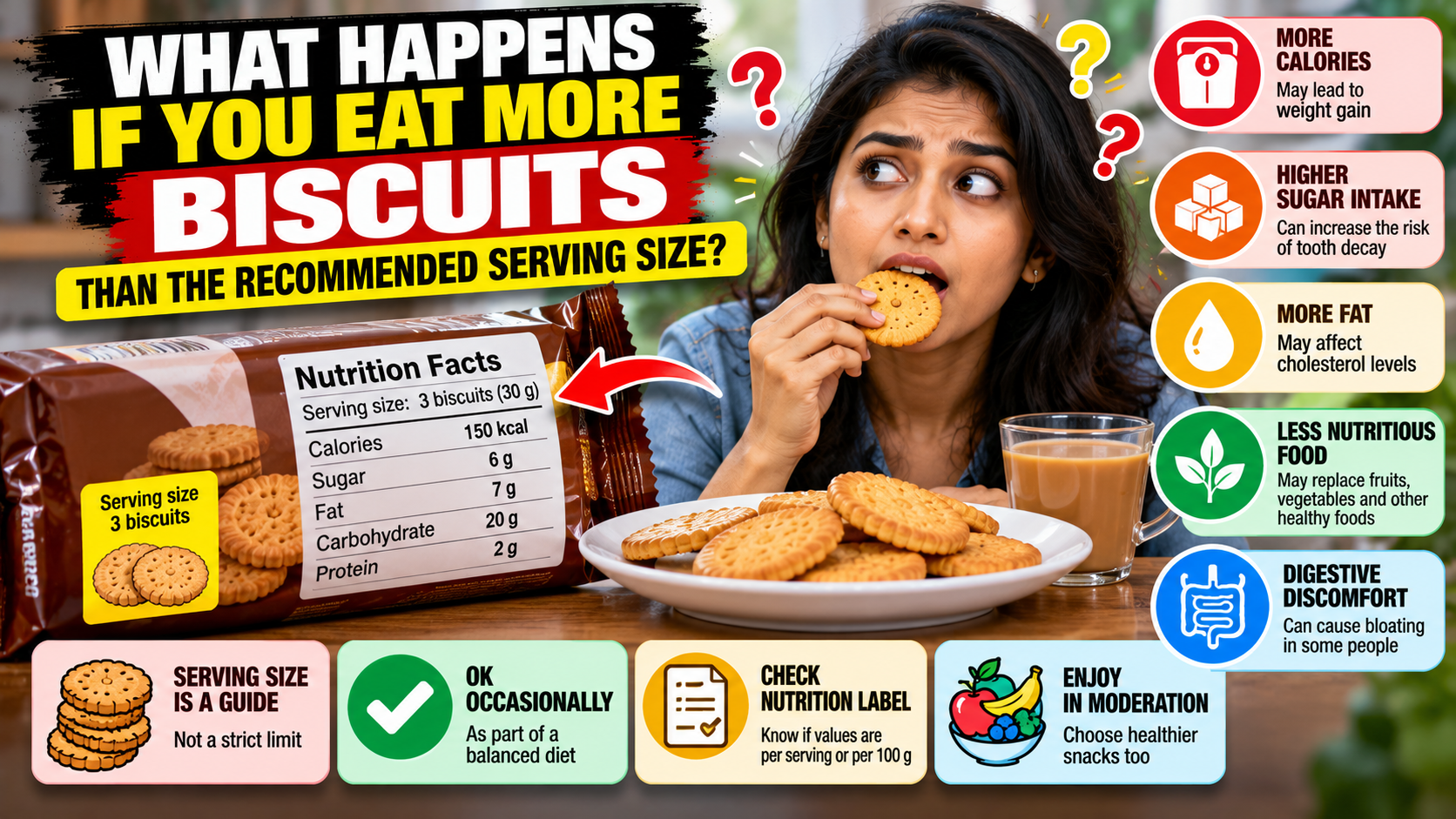
Have you ever opened a packet of biscuits intending to eat just two or three, only to finish half the packet? It happens to many of us! But have you ever checked the serving size and wondered what happens when you eat more biscuits than the amount mentioned on the label?
Biscuit packets often display nutritional information such as calories, sugar, fat, and carbohydrates per serving. Understanding these details can help you make better food choices and manage your daily diet.
Eating more than the suggested serving occasionally is not necessarily harmful. However, regularly consuming large quantities of biscuits may increase your intake of calories, sugar, and unhealthy fats.
Let’s explore what happens when you eat more biscuits than recommended.
1. You May Consume More Calories
Biscuits contain calories from carbohydrates and fats, and some varieties also contain considerable amounts of sugar.
Eating more biscuits than planned can increase your daily calorie intake. If you consistently consume more calories than your body needs, you may gradually gain weight.
For example, if three biscuits contain 150 calories, eating six biscuits provides approximately 300 calories.
The extra calories may not seem significant on one occasion, but they can add up when this becomes a daily habit.
2. Your Sugar Intake May Increase
Many sweet biscuits, including cream-filled and chocolate-flavoured varieties, contain added sugar.
Eating several servings can increase your daily added sugar intake. Consuming too much added sugar frequently can contribute to tooth decay and make it harder to maintain a balanced diet.
To make a healthier choice, compare sugar levels on different biscuit packets and consider choosing varieties with less added sugar.
Remember that biscuits labelled “healthy” or “digestive” may still contain added sugar and significant amounts of fat.
3. You May Consume More Fat
Some biscuits contain butter, palm oil, or other fats that contribute to their texture and flavour.
Eating large quantities can increase your total fat intake. Depending on the ingredients, this may also increase your intake of saturated fat.
Frequently consuming too much saturated fat can raise LDL, or “bad” cholesterol, which is associated with a higher risk of heart disease.
Check the nutrition label for total fat and saturated fat, and compare products before choosing your regular snack.
4. Biscuits May Replace More Nutritious Foods
Biscuits can be convenient, but they generally should not replace balanced meals or nutritious snacks.
If you frequently eat biscuits instead of fruit, vegetables, whole grains, nuts, or protein-rich foods, you may miss out on important vitamins, minerals, fibre, and protein.
For a more balanced snack, consider pairing a small portion of biscuits with fruit or plain yoghurt, depending on your dietary needs.
5. Eating Too Many Biscuits May Cause Discomfort
Eating a large quantity of biscuits in one sitting may leave you feeling overly full or uncomfortable.
Some people may experience bloating or digestive discomfort, particularly if they eat quickly or consume large amounts of rich, high-fat foods.
If you notice discomfort after eating biscuits, try reducing your portion and eating more slowly.
How Much Nutrition Do You Get From Extra Biscuits?
Let’s look at a simple example of the nutritional information on a biscuit packet.
| Nutrient | Per serving (3 biscuits) | For 6 biscuits |
|---|---|---|
| Calories | 150 kcal | 300 kcal |
| Sugar | 6 g | 12 g |
| Fat | 7 g | 14 g |
If you eat six biscuits instead of three, you consume approximately twice the calories, sugar, and fat listed for one serving.
These figures are only an example. Actual nutrition values vary depending on the biscuit brand, size, ingredients, and recipe.
Eating six biscuits once does not automatically mean you have harmed your health. Your overall diet, activity level, portion sizes, and long-term eating habits matter much more than one snack.
Is It Okay to Eat More Than One Serving?
Yes, eating more than one serving occasionally can fit into an otherwise balanced diet. The serving size printed on a packet is a reference amount for understanding the nutrition information, not a strict limit on what your body can tolerate.
However, regularly eating several servings may increase your calorie, sugar, and saturated fat intake, especially if you frequently choose cream-filled, chocolate-coated, or heavily sweetened biscuits.
Instead of focusing only on the number of biscuits, consider how often you eat them and how they fit into your overall diet.
How to Read a Biscuit Nutrition Label
Before buying biscuits, take a moment to check these details:
- Serving size: Find out how many biscuits or how many grams make up one serving.
- Calories: Check how much energy each serving provides.
- Sugar: Look at the sugar content and, where available, the added sugar information.
- Total and saturated fat: Compare products to identify options with lower saturated fat.
- Fibre: Biscuits made with whole grains may provide more fibre, but check the actual nutrition information.
- Per serving versus per 100 g: Make sure you know which figure you are comparing.
If the packet lists nutrition per 100 grams, the figures will not necessarily represent the amount you eat in one sitting. Compare similar products using the same measurement.
Simple Tips for Eating Biscuits in Moderation
You don’t have to stop eating biscuits completely to maintain a healthy diet. A few simple habits can help:
- Take the portion you want to eat and put the packet away.
- Avoid eating directly from a large packet when distracted by television or your phone.
- Compare nutrition labels when buying biscuits.
- Choose fruit, nuts, or other nutritious snacks more often.
- Enjoy biscuits occasionally without feeling guilty, while paying attention to your overall eating pattern.
Conclusion
Eating more biscuits than the recommended serving size means consuming more calories, sugar, and fat than the packet lists for one serving. If it happens occasionally, it is usually not a reason to worry. However, regularly eating large quantities may affect your weight, dental health, and overall diet quality.
The best approach is to understand nutrition labels, watch your portions, and enjoy biscuits as part of a varied, balanced diet.
Remember: A serving size is a helpful guide, not a strict rule. Your overall eating habits matter more than a single snack.
Disclaimer: This article provides general nutrition information and is not a substitute for personalised medical or dietary advice.