



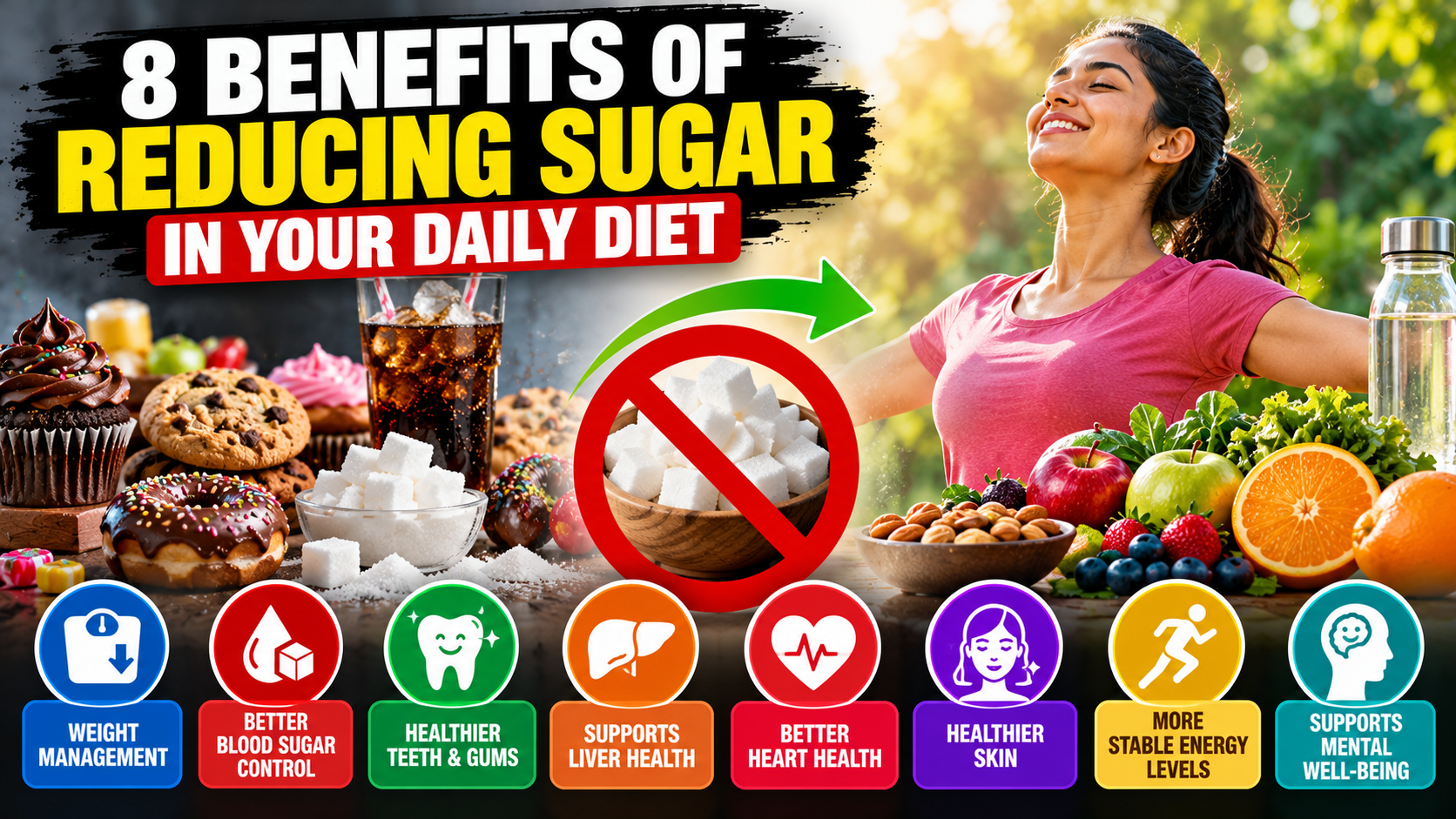
Sugar is part of everyday life. We add it to tea and coffee, enjoy sweets after meals, drink soft drinks, and eat packaged foods that may contain more sugar than we realise.
Although sugar can provide energy, consuming too much added sugar regularly can contribute to weight gain, tooth decay, and an increased risk of several health problems. The good news is that reducing your daily sugar intake is a practical step towards healthier eating.
But does avoiding sugar improve your health? What happens when you reduce sugar, and do you need to stop eating it completely?
In this article, we explore eight potential benefits of reducing added sugar, explain the science behind them, and share simple ways to cut back without giving up every food you enjoy.
1. Better Weight Management
One of the main benefits of reducing added sugar is that it can make managing your weight easier.
Sugary drinks, sweets, cakes, biscuits, and desserts can provide substantial calories without keeping you full for very long. When these foods and drinks contribute to excess calorie intake, they can lead to weight gain over time.
For example, drinking sweetened beverages throughout the day can add a considerable amount of sugar and calories to your diet without providing the same fullness as a balanced meal.
Reducing these sources of sugar and choosing nutritious alternatives may help you manage your calorie intake.
Try these simple changes:
- Replace sugary soft drinks with water or sparkling water without added sugar.
- Choose whole fruit instead of sweets when you want something sweet.
- Reduce the amount of sugar you add to tea and coffee gradually.
- Eat balanced meals containing vegetables, protein, and fibre-rich foods.
Reducing sugar alone does not guarantee weight loss. Overall food intake, physical activity, sleep, and other factors also influence body weight.
2. Better Blood Sugar Control
Your body breaks down carbohydrates into sugars that can enter the bloodstream. The hormone insulin helps move glucose from the blood into cells, where it can be used or stored for energy.
Frequently consuming large amounts of sugary drinks and foods can make it easier to consume excess calories and may contribute to weight gain, which is a risk factor for type 2 diabetes.
Reducing added sugar, particularly from sugary beverages, can be a useful part of a healthy eating pattern.
However, eating sugar does not automatically mean you will develop diabetes. Type 2 diabetes is a complex condition influenced by genetics, body weight, physical activity, age, and other factors.
If you already have diabetes, reducing added sugar may help with meal planning and blood glucose management, but it does not replace prescribed medication or professional medical advice.
3. Healthier Teeth and Gums
Sugar reduction can have a direct benefit for oral health.
Bacteria in dental plaque use sugars from food and drinks to produce acids. These acids attack tooth enamel, increasing the risk of cavities.
Repeated exposure throughout the day can be particularly harmful. Sipping a sweet drink over several hours or frequently eating sugary snacks can expose teeth to repeated acid attacks.
Reducing how often you consume sugary foods and drinks can help lower this risk.
Protect your teeth by:
- Limiting sweets, sugary drinks, and frequent sugary snacks.
- Drinking water regularly.
- Brushing twice daily with fluoride toothpaste.
- Cleaning between your teeth and visiting a dentist as recommended.
Reducing sugar helps prevent tooth decay, but it does not eliminate the need for good oral hygiene.
4. Supporting Liver Health
The liver processes nutrients from food, including fructose, a type of sugar found naturally in fruit and also in table sugar and many sweetened products.
Consuming excessive calories, particularly through frequent sugary drinks, can contribute to fat accumulating in the liver. Over time, metabolic risk factors and excess liver fat can lead to metabolic dysfunction-associated steatotic liver disease (MASLD), previously commonly called non-alcoholic fatty liver disease (NAFLD).
Reducing sugary drinks and maintaining a balanced diet can help lower the risk of excess calorie intake and support metabolic health.
Useful steps include:
- Replacing sugar-sweetened drinks with water.
- Eating appropriate portions of balanced meals.
- Choosing whole fruit rather than relying on sugary drinks.
- Staying physically active.
- Seeking medical advice if you have concerns about liver health.
It is important to understand that liver disease has several possible causes. Cutting sugar is not a guaranteed cure, and people with diagnosed liver conditions should follow advice from their healthcare professionals.
5. Better Long-Term Heart Health
Eating too much added sugar can contribute to health risks associated with cardiovascular disease, particularly when it forms a regular part of a diet that provides excess calories.
High consumption of sugary drinks is associated with weight gain and a higher risk of conditions such as type 2 diabetes and heart disease.
Reducing added sugar can help improve the overall quality of your diet, especially when sugary products are replaced with more nutritious foods rather than simply exchanged for other high-calorie options.
For better heart health, consider:
- Eating vegetables, fruits, legumes, and whole grains.
- Including appropriate sources of protein.
- Choosing unsaturated fats, such as those found in nuts and some vegetable oils.
- Limiting sugary drinks and heavily sweetened snacks.
- Maintaining regular physical activity.
- Monitoring blood pressure and cholesterol when appropriate.
Heart health depends on many factors, including smoking, genetics, blood pressure, cholesterol, and physical activity. Reducing sugar is one useful step, not a guarantee against heart disease.
6. Supporting Healthy Skin
Many people hope that avoiding sugar will make their skin glow or eliminate acne. The reality is more complicated.
Some research suggests that diets with a high glycaemic load may worsen acne in certain people. Foods and drinks that rapidly raise blood glucose can affect hormonal and metabolic processes that may influence skin health.
However, acne has many possible causes, including hormones, genetics, skin inflammation, and certain medications. There is not enough evidence to promise that cutting out sugar will clear everyone’s skin.
Reducing frequent consumption of sugary drinks and sweets may still be a reasonable part of a balanced diet.
For healthier skin:
- Eat a varied diet with vegetables and whole fruits.
- Drink enough water to meet your needs.
- Get adequate sleep.
- Use suitable skin-care products.
- Seek medical advice for persistent or severe acne.
Cutting back on added sugar may support general health, but it should not be presented as a cure for acne, dark spots, or wrinkles.
7. More Balanced Eating Habits and Energy Levels
Sugary foods and drinks can provide quick energy, but the effect depends on what you consume, how much you eat, and what else is in your meal.
Some people notice fluctuations in hunger or energy when their diets rely heavily on sweetened beverages and refined snacks. Replacing these items with balanced meals may help them maintain more consistent eating habits.
Try meals that combine:
- Fibre-rich carbohydrates, such as oats and whole grains.
- Protein sources, such as beans, lentils, eggs, fish, or other suitable foods.
- Vegetables and whole fruits.
- Healthy fats from nuts, seeds, and other sources.
You do not need to eliminate all carbohydrates to eat healthily. Foods such as whole grains, beans, vegetables, and whole fruits provide important nutrients and can be part of a balanced diet.
If you frequently experience fatigue, dizziness, or unusual changes in energy, do not assume sugar is the cause. Consider seeking medical advice if symptoms persist.
8. Supporting Mental Well-Being
Food habits can influence overall well-being, and researchers have investigated links between sugary drinks, dietary patterns, and depressive symptoms.
Some observational studies have found associations between higher consumption of sugary beverages and a greater likelihood of depressive symptoms. However, an association does not prove that sugar directly causes depression.
Mental health is influenced by many factors, including genetics, stress, sleep, relationships, physical health, and life circumstances.
Reducing added sugar may improve the overall quality of your diet, particularly when it means eating more nutritious foods. But it is not a proven treatment for depression, anxiety, or other mental health conditions.
If you are struggling with persistent low mood, loss of interest, or other mental health symptoms, consider speaking with a qualified healthcare professional.
How Much Sugar Is Too Much?
The World Health Organization (WHO) recommends reducing free sugar intake to less than 10% of total daily energy intake for both adults and children. It suggests that reducing this to below 5% may provide additional health benefits.
For someone consuming 2,000 calories per day, these levels are approximately:
- Below 50 grams per day at 10% of daily energy.
- Around 25 grams per day at 5% of daily energy.
These are general guidelines, not personalised medical limits. Individual energy needs differ, and the figures refer to free sugars rather than all carbohydrates or all sugars naturally present in foods.
Free sugars include sugars added to foods and drinks, as well as sugars naturally present in honey, syrups, fruit juice, and fruit juice concentrates.
Sugars naturally contained within intact whole fruits and plain milk are not classified as free sugars under the WHO definition.
Source: WHO — Guideline: Sugars Intake for Adults and Children.
Foods and Drinks That Often Contain Added Sugar
You may already know that sweets and soft drinks contain sugar. However, added sugar can also appear in everyday products.
Look out for:
- Soft drinks and sweetened packaged beverages.
- Cakes, biscuits, pastries, and confectionery.
- Sweetened breakfast cereals.
- Flavoured yoghurt and sweetened milk drinks.
- Packaged desserts and ice cream.
- Sweetened tea, coffee, and energy drinks.
- Some sauces, dressings, and packaged snacks.
Check the nutrition label and ingredient list when buying packaged foods. Ingredients such as sugar, glucose syrup, fructose syrup, dextrose, and sucrose can indicate added sugars.
Remember that a product can contain sugar even when it is not particularly sweet.
Natural Sugar vs Added Sugar: What’s the Difference?
Not all sources of sugar should be treated in the same way.
Added sugar is introduced during food preparation or manufacturing. Examples include sugar added to tea, table sugar in desserts, and sweeteners in soft drinks.
Free sugar includes added sugars plus sugars naturally present in honey, syrups, and fruit juices.
Naturally occurring sugar is found within foods such as whole fruit and plain milk. These foods also provide other nutrients, and whole fruits contain fibre.
For most people, the goal should be to reduce excessive added and free sugars—not to avoid nutritious foods simply because they contain natural sugars.
Whole fruit can remain an important part of a healthy diet.
Simple Ways to Reduce Sugar Every Day
You do not have to change everything overnight. Small, sustainable changes are often easier to maintain.
1. Reduce sugar in tea and coffee. If you normally add two teaspoons, try one and gradually adjust to a less sweet taste.
2. Make water your everyday drink. Keep soft drinks, sweetened juices, and energy drinks as occasional choices rather than daily habits.
3. Choose whole fruit. Fruit can satisfy a desire for sweetness while providing fibre, vitamins, and minerals.
4. Read food labels. Compare similar products and choose options with less added sugar when available.
5. Prepare snacks at home. Nuts, plain yoghurt, whole fruit, and other nutritious options can replace frequent sugary snacks.
6. Avoid using sugary drinks to quench thirst. Water is usually a practical first choice for everyday hydration.
7. Make changes gradually. You may find it easier to reduce sweetness step by step rather than attempting an extreme restriction.
8. Focus on your overall diet. Cutting sugar is more helpful when accompanied by balanced meals, regular movement, and sufficient sleep.
Do You Need to Stop Eating Sugar Completely?
No. For most people, a healthier goal is to limit excessive added and free sugars rather than attempt to eliminate every source of sugar.
The body uses glucose as an energy source, and carbohydrates are present in many nutritious foods. Whole grains, legumes, vegetables, and fruits can all contribute to a balanced diet.
The main concern is regularly consuming too much free sugar, particularly through sugary beverages and heavily sweetened foods.
A flexible eating pattern that includes nutritious foods and leaves room for occasional treats may be easier to sustain than a strict, all-or-nothing approach.
If you have diabetes or another medical condition that affects your diet, ask your healthcare professional for advice tailored to your needs.
Conclusion: Small Changes Can Make a Difference
Reducing added sugar can support healthier eating habits, help with weight management, lower the risk of tooth decay, and contribute to better long-term metabolic health.
It may also improve the nutritional quality of your diet when sugary products are replaced with whole fruits, vegetables, whole grains, and other nutritious foods.
However, avoiding sugar does not automatically prevent every disease, clear acne, reverse ageing, or treat depression. Health depends on a combination of dietary, lifestyle, genetic, and environmental factors.
Start with one practical change: reduce the sugar in your daily tea or coffee, replace a sugary drink with water, or check the labels on your favourite packaged foods.
You do not need a perfect diet to make progress. Consistent, realistic choices can help you build healthier habits over time.
Disclaimer: This article is for general educational purposes and is not a substitute for personalised medical advice, diagnosis, or treatment.