



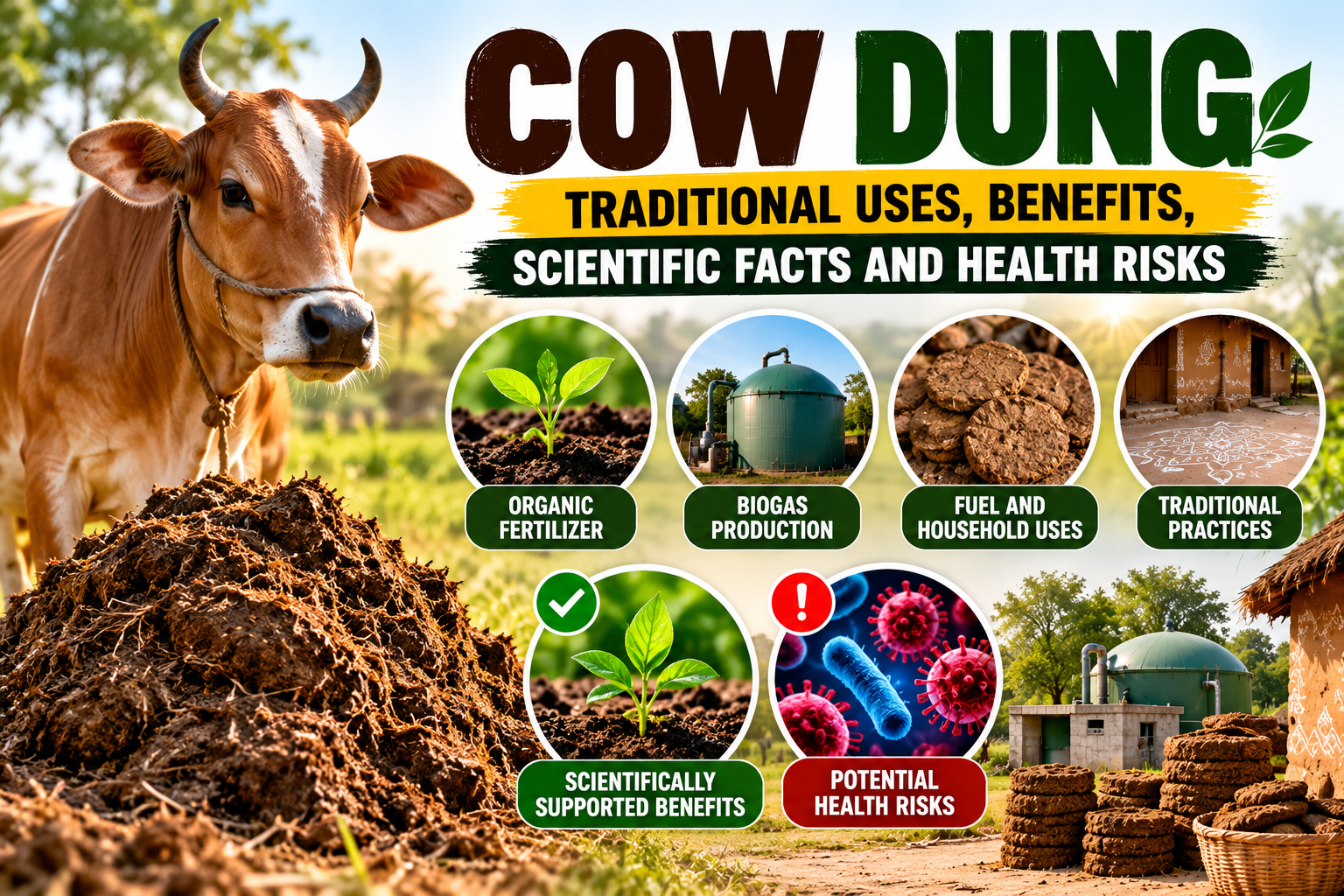
Cow dung has played an important role in traditional Indian life for centuries. In rural communities, it has been used as organic manure, fuel, flooring material and an ingredient in certain traditional practices. Today, scientists are also studying how cattle waste can be converted into compost, biofertilizers, biogas and other useful products.
But how much of what we hear about cow dung is scientifically proven? Can it improve soil health? Is it useful for producing clean energy? And are claims about its ability to cure diseases supported by evidence?
Let’s explore the traditional uses, practical benefits, scientific findings and potential health risks of cow dung.
1. What Is Cow Dung?
Cow dung is the waste material produced by cattle during digestion. It contains water, undigested plant material, microorganisms and other organic compounds.
Its composition varies depending on the animal’s diet, health, age and living conditions. Because it contains organic matter and nutrients, properly processed cow dung can be valuable in agriculture.
However, fresh cow dung is not a sterile material. It can contain microorganisms that may cause illness in humans, so it must be handled carefully.
2. Cow Dung as an Organic Fertilizer
One of the most established uses of cow dung is improving agricultural soil.
When properly composted, cow dung adds organic matter to the soil and helps support soil structure, water retention and nutrient cycling. It can also provide nutrients that plants need for growth.
Some of its agricultural benefits include:
- Improving soil structure: Organic matter can help improve the physical condition of soil.
- Supporting soil organisms: Compost provides resources for many beneficial soil microorganisms.
- Recycling nutrients: Composting returns organic materials and nutrients to agricultural land.
- Reducing waste: Using cattle waste as manure can reduce the amount of organic waste that needs disposal.
- Supporting sustainable farming: Properly managed manure can form part of an integrated soil-fertility programme.
The results depend on soil type, crop requirements, the quality of the manure and how it is applied. Cow dung is useful, but it does not automatically replace every fertilizer a crop may need.
3. Cow Dung and Biogas Production
Cow dung can also be used to produce biogas.
In a biogas plant, microorganisms break down organic matter in an oxygen-free environment. This process produces a gas mixture containing methane and carbon dioxide.
The methane-rich gas can be used as a source of energy for cooking, heating and, with suitable equipment, electricity generation.
After digestion, the remaining material is known as digestate. When properly managed, it can be used as a soil amendment or processed further into fertilizer products.
This approach offers several potential benefits:
- Produces useful energy from organic waste.
- Helps manage cattle waste.
- Can reduce dependence on some conventional fuels.
- Creates opportunities for rural businesses and local employment.
The benefits depend on the plant’s design, maintenance, waste management and the way the resulting gas and digestate are handled.
4. Cow Dung in Traditional Indian Practices
Cow dung has a long history in traditional Indian households and cultural practices. In some rural areas, it has been used to coat earthen floors, prepare fuel cakes, and form part of religious ceremonies.
These practices developed in different social, environmental and cultural settings. Some uses are practical, while others are connected to religious beliefs and customs.
It is important to distinguish cultural significance from medical evidence. A practice may have a long history without every health claim associated with it being scientifically demonstrated.
5. Can Cow Dung Cure Diseases?
Claims sometimes circulate that cow dung can cure infections, improve immunity, treat skin conditions or prevent serious diseases.
At present, there is not sufficient reliable clinical evidence to recommend raw cow dung as a treatment for human diseases.
Laboratory studies may identify particular compounds or microorganisms with potentially useful properties. However, a laboratory finding does not establish that applying or consuming cow dung is safe or effective in people.
A medical treatment needs appropriate testing to determine its effectiveness, dosage, side effects and safety.
Cow dung should not be eaten, applied to wounds or used as a substitute for prescribed medication. Anyone experiencing symptoms or a medical condition should seek advice from a qualified healthcare professional.
6. Does Cow Dung Have Antibacterial Properties?
Some laboratory studies have investigated microorganisms and compounds found in cow dung. Researchers are interested in whether particular components could have agricultural, environmental or industrial applications.
However, the term “antibacterial” can be misleading when taken out of context.
A substance that inhibits certain bacteria under laboratory conditions is not necessarily a safe or effective medicine. Cow dung can contain both harmless microorganisms and disease-causing organisms.
Therefore, claims that cow dung kills harmful bacteria should not be interpreted as proof that it disinfects the human body or treats infections.
More research is needed before experimental findings can support specific medical uses.
7. Can Cow Dung Repel Mosquitoes?
Cow dung has traditionally been used in some rural settings as a fuel, including in dried cakes. Some people have also suggested that cow-dung mixtures or smoke can repel mosquitoes.
However, these practices should not be treated as proven methods of preventing mosquito-borne diseases such as dengue or malaria.
Burning dung or other organic materials can produce smoke and harmful particulate matter. Smoke exposure can irritate the eyes and respiratory system and may worsen breathing problems.
For mosquito prevention, use established measures such as removing standing water, using appropriate mosquito repellents, fitting screens and sleeping under mosquito nets where needed.
8. Cow Dung and the Environment
When managed properly, cattle waste can be a useful resource rather than simply a disposal problem.
Composting and biogas production can help recycle organic materials and recover nutrients or energy. These methods may also reduce some of the environmental problems associated with unmanaged waste.
However, poorly managed manure can contaminate water, release unpleasant odours and contribute to environmental pollution. The handling and storage methods therefore matter just as much as the material itself.
The National Institution for Transforming India (NITI Aayog) has discussed the use of cattle waste for compost, biofertilizers and biogas, along with other value-added products.
9. Health Risks of Handling Cow Dung
Although cow dung can be useful in agriculture, it can contain pathogens that cause human illness.
Potential hazards include certain strains of E. coli, Salmonella and parasites. Exposure can occur through contaminated hands, food, water or surfaces.
To reduce risks:
- Wear suitable gloves when handling raw manure.
- Wash hands thoroughly with soap and water afterwards.
- Keep raw manure away from drinking water and food-preparation areas.
- Avoid contact between fresh manure and open wounds.
- Compost manure using an appropriate, controlled process before agricultural use.
- Keep children away from contaminated areas.
People who develop symptoms such as severe diarrhoea, vomiting or fever after exposure to animal waste should seek medical advice.
10. Fresh Cow Dung vs. Properly Composted Cow Dung
Fresh cow dung and properly composted manure are not the same.
Fresh manure may contain pathogens and can damage plants if applied incorrectly or in excessive amounts. Proper composting can reduce pathogens and help stabilize organic material when the process is managed effectively.
However, composting does not guarantee that every harmful organism has been eliminated. The outcome depends on temperature, time, moisture, turning and other process conditions.
For crops intended to be eaten, follow appropriate agricultural guidance on manure treatment and application timing, particularly for vegetables eaten raw.
11. What Does Science Actually Say?
The scientific picture is best understood by separating established uses from unproven claims.
Uses supported by practical evidence:
- Properly processed cow dung can be used as organic manure.
- Cattle waste can be converted into biogas.
- Composting can help recycle organic matter and nutrients.
- Processed cattle waste can be used in certain agricultural and industrial products.
Claims that require stronger evidence:
- Raw cow dung cures human diseases.
- Applying cow dung to the body reliably prevents infections.
- Cow dung can replace proven medical treatments.
- Cow-dung mixtures reliably prevent dengue or other mosquito-borne illnesses.
The key lesson is that the usefulness of a natural material depends on how it is used. A material can be valuable for agriculture without being safe or effective as a medicine.
Conclusion
Cow dung has important traditional, agricultural and environmental uses. When properly processed, it can help improve soil, recycle nutrients and produce biogas.
At the same time, it can contain harmful microorganisms, and claims that it cures human diseases are not supported by sufficient clinical evidence.
We can respect traditional practices while evaluating health claims through scientific research. The best approach is to make practical use of cow dung where its benefits are established, handle it safely and avoid treating unproven remedies as substitutes for modern medical care.
Sources and Further Reading
- NITI Aayog: Production and Promotion of Organic Fertiliser, with Special Focus on Improving the Economic Viability of Gaushalas
- Peer-reviewed scientific review: Scientific Characterization Methods for Better Utilization of Cattle Dung and Urine
- Research review: Cow-Dung Microflora for Agricultural, Biotechnological and Environmental Applications
- Public health research: Pathogenic Bacteria and Parasites of Human Importance from Cow Dung
- U.S. Geological Survey: Pathogens from Dairy Manure and Human Health Risks
Disclaimer: This article is for general educational purposes and is not medical advice. Consult a qualified healthcare professional about symptoms, infections or treatment decisions.