



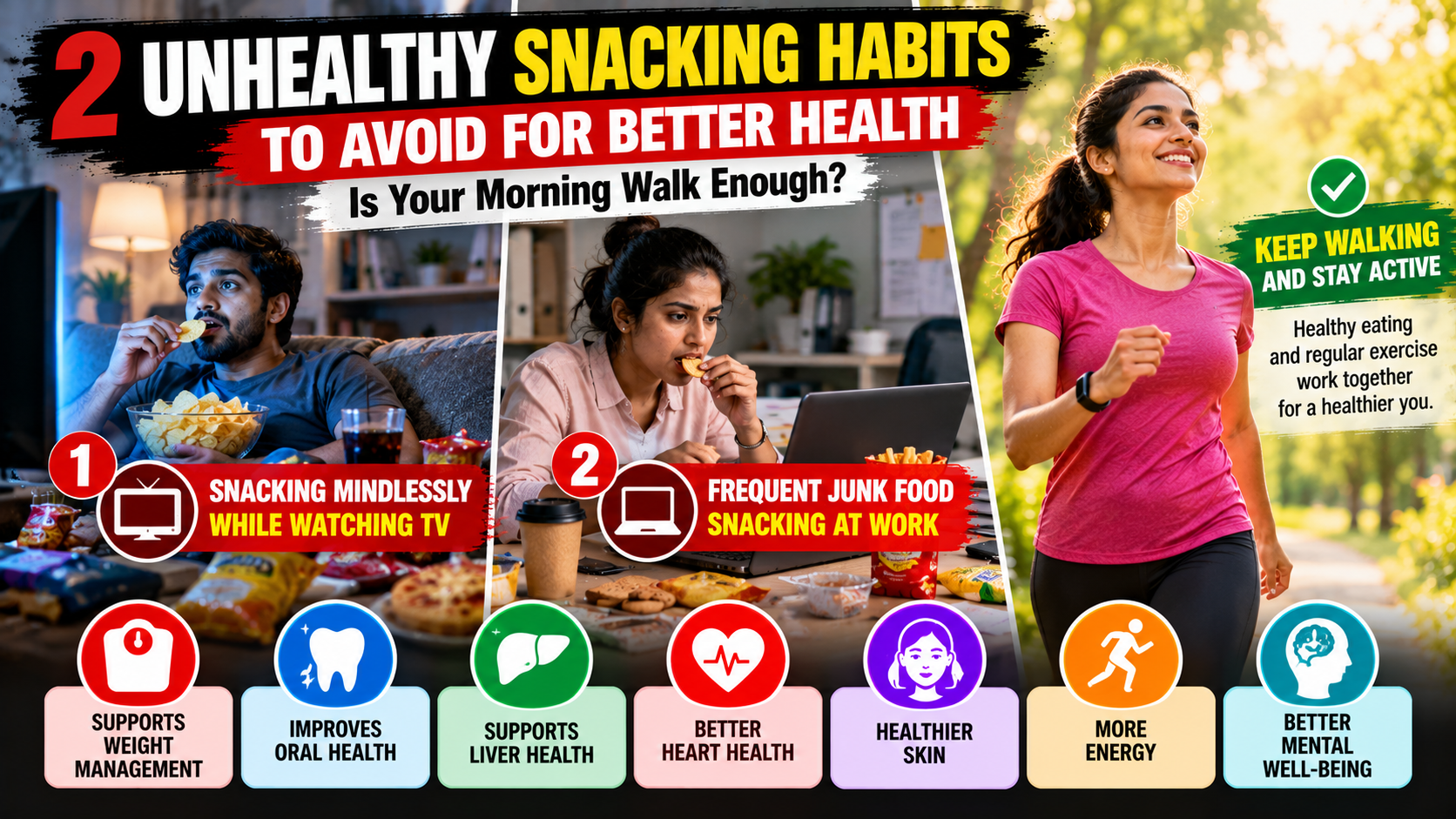
Many people start their day with a morning walk, jogging, or cycling to stay fit. However, even people who exercise regularly may struggle with weight management and unhealthy eating habits.
One reason could be mindless snacking — eating without being truly hungry, often while watching television, working, or passing the time.
Exercise is important, but our everyday food choices matter too. By becoming more aware of when and why we snack, we can build healthier habits and support our long-term well-being.
In this article, let’s explore two common snacking habits to avoid and practical ways to replace them with healthier choices.
1. Avoid Snacking Mindlessly While Watching TV
Have you ever opened a packet of chips while watching television and realised that you finished the entire packet without noticing?
This is a common habit. When we focus on a movie, television programme, or mobile phone, we may pay less attention to how much we eat.
Snacking occasionally is not necessarily unhealthy. The problem arises when we repeatedly eat out of habit, boredom, or distraction rather than hunger.
Why can this habit affect your health?
Unintentional overeating: Large packets of chips, biscuits, sweets, and other snacks can make it easy to consume more food than intended.
Extra calories: Frequent consumption of energy-dense snacks may contribute to weight gain when total energy intake regularly exceeds what the body uses.
Poor food choices: If packaged snacks frequently replace fruit, vegetables, nuts, or other nutritious foods, the overall quality of your diet may suffer.
Habit formation: Repeatedly connecting entertainment with food can make you feel that you need a snack every time you sit down to watch television.
How can you change this habit?
- Eat meals at a table whenever possible instead of eating directly from a large packet.
- If you want a snack, place a reasonable portion in a small bowl.
- Ask yourself whether you are physically hungry or simply bored.
- Choose nutritious options such as whole fruit, plain yoghurt, or a small portion of unsalted nuts.
- Keep high-sugar and high-salt snacks out of immediate reach if you tend to eat them automatically.
- Try enjoying a television programme without food sometimes.
You do not have to stop enjoying your favourite snacks completely. The goal is to eat consciously and avoid making mindless snacking an everyday routine.
2. Avoid Frequent Junk Food Snacking While Working
Many people spend long hours at a desk, particularly in office and IT jobs. During a busy workday, it can be tempting to reach for biscuits, chips, sweets, sugary drinks, or fast food.
Some people snack when they feel stressed. Others eat because food is readily available, they are bored, or they want a short break from work.
Occasional snacks are not automatically harmful. However, frequently relying on highly processed, calorie-dense foods can make it harder to maintain a balanced diet.
Why is workplace snacking worth paying attention to?
Excess calorie intake: Eating several snacks throughout the day can add substantial calories without making you feel as satisfied as a balanced meal might.
High sugar and salt intake: Many packaged snacks and sweetened beverages contain considerable amounts of added sugar or sodium.
Low dietary variety: Depending heavily on convenience foods may mean missing out on fibre, vitamins, minerals, and other nutrients found in a varied diet.
Distracted eating: When you eat while concentrating on emails, meetings, or deadlines, you may not notice when you feel satisfied.
Healthier habits for the workplace
- Keep a water bottle nearby and drink water regularly.
- Bring a balanced lunch instead of relying on fast food every day.
- Prepare suitable snacks, such as fruit, unsalted nuts, roasted chickpeas, or plain yoghurt.
- Take short breaks to stretch, stand, or walk around when practical.
- Avoid keeping large packets of snacks open on your desk.
- Check food labels to compare added sugar, sodium, fibre, and serving sizes.
- If you feel hungry between meals, choose a snack that fits your dietary needs rather than forcing yourself to ignore hunger.
Planning ahead makes healthier choices easier, especially on busy days.
3. Does Avoiding These Two Habits Mean You No Longer Need Morning Walks?
No. Avoiding unhealthy snacking and exercising regularly serve different purposes.
Improving your diet may help you manage your weight, but walking and other physical activities offer additional health benefits. Regular activity can support cardiovascular health, blood sugar regulation, stronger muscles and bones, better sleep, and mental well-being. <Cite refs={[“turn133790search0″,”turn133790search3”]}/>
For most adults, public health guidelines recommend aiming for at least 150 minutes of moderate-intensity aerobic activity each week, along with muscle-strengthening activities on two or more days. Brisk walking is one way to meet the aerobic target. <Cite refs={[“turn133790search4”]}/>
You do not necessarily need to walk first thing in the morning. Choose a time that suits your routine. Walking in the evening, cycling, swimming, dancing, or another activity you enjoy can also help you stay active.
If you are new to exercise, start at a comfortable level and increase gradually. People with health conditions or specific exercise limitations should seek advice from a healthcare professional about suitable activities.
4. Build a Balanced Routine for Everyday Health
Instead of focusing on just one habit, combine several manageable changes:
Eat balanced meals. Include a variety of vegetables, fruits, whole grains, protein sources, and other foods appropriate for your needs.
Recognise hunger and fullness. Before reaching for a snack, pause and consider whether you are hungry, thirsty, stressed, or simply looking for a distraction.
Move throughout the day. Break up long periods of sitting with brief movement breaks whenever possible.
Sleep consistently. Good sleep supports general health and can make it easier to maintain a regular daily routine.
Make gradual changes. Sustainable habits are usually more practical than extreme diets or sudden, demanding exercise plans.
Remember that health is influenced by many factors, including diet, activity, sleep, stress, medical conditions, and genetics. No single habit guarantees a particular body shape or prevents every illness.
Conclusion
Mindless snacking while watching television and frequently eating junk food during work are two habits worth reviewing if you want to improve your diet.
Portion awareness, nutritious snack choices, planned meals, and regular movement can help you develop a healthier routine.
But skipping snacks does not automatically eliminate the need for exercise, and a morning walk is not the only way to stay active. The best approach is to combine balanced eating with regular physical activity and habits you can maintain over time.
Start with one small change today. Over time, consistent choices can make a meaningful difference to your overall health.
Disclaimer: This article provides general health information and is not a substitute for individual medical or nutritional advice.