


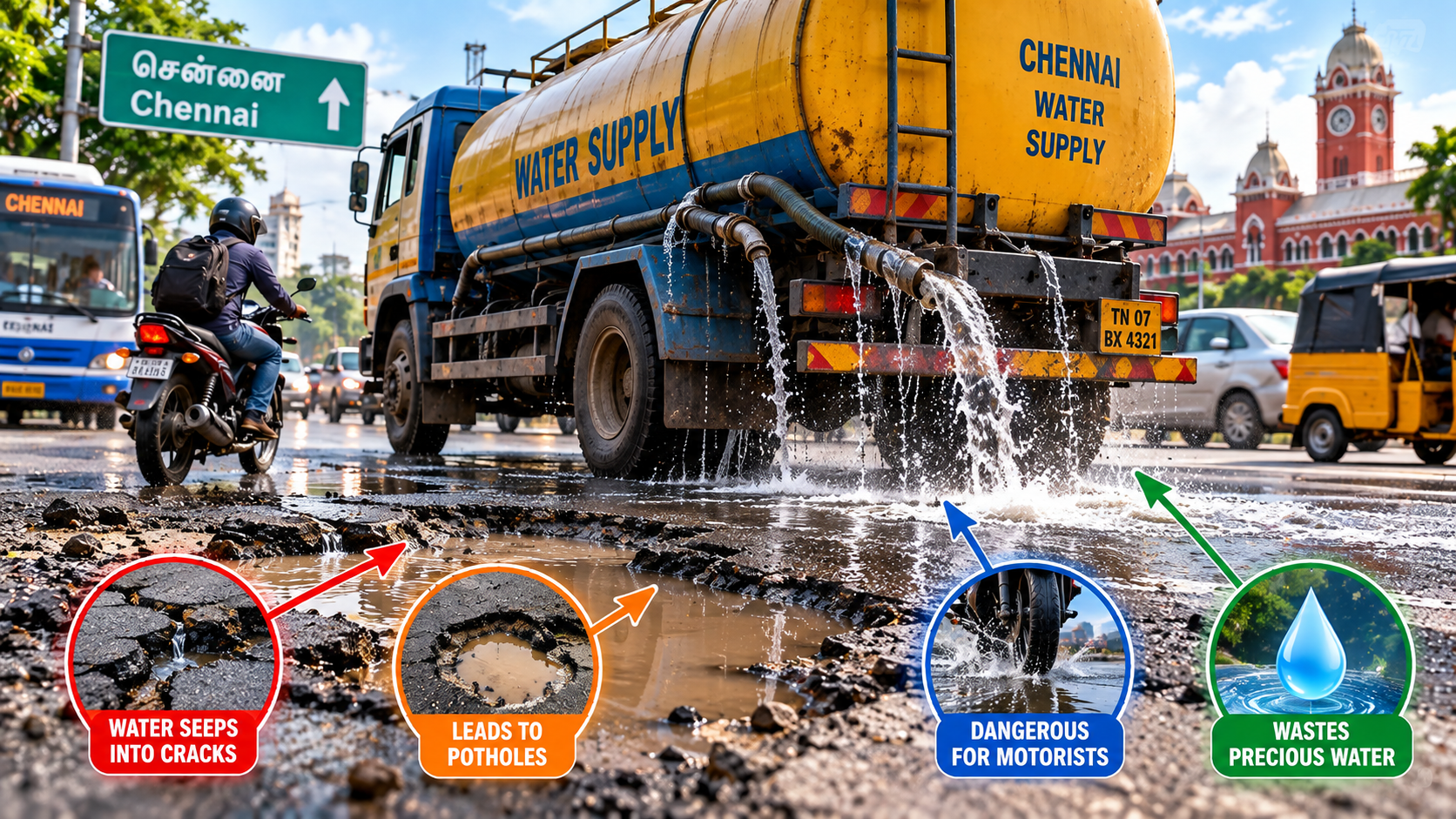
Water tankers help Chennai meet its daily water needs, but leaking tanks, overflowing water and poorly maintained vehicles can contribute to road damage, water wastage and dangerous conditions for commuters.
Chennai depends on water tanker lorries to supply homes, apartments, businesses and construction sites. During periods of water shortage, these vehicles play an essential role in keeping the city running.
But there is a growing civic concern: water leaking from tanker lorries can collect on roads, worsen existing pavement damage and create slippery conditions for motorists. When these problems go unaddressed, residents are left dealing with potholes, repeated road repairs and avoidable safety risks.
The solution is not to stop essential water deliveries. It is to make water transportation safer, better maintained and more accountable.
How Water Tanker Lorries Can Damage Roads
Roads are designed to withstand traffic and ordinary weather conditions, but their durability depends on proper construction, drainage and maintenance.
When water repeatedly accumulates on a damaged road, it can penetrate existing cracks and weaken the pavement layers. Under repeated traffic loads, this can contribute to potholes, surface deterioration and loose gravel.
The problem becomes more serious when heavy tanker lorries repeatedly travel along the same stretch of road.
Some of the potential effects include:
- Pothole formation: Water entering existing cracks can contribute to the deterioration of pavement, particularly when combined with heavy traffic and poor drainage.
- Weakening of road surfaces: Repeated water exposure can accelerate damage where the pavement is already compromised.
- Slippery road conditions: Water mixed with oil, dust and other road contaminants can reduce tyre grip.
- Higher repair costs: Road authorities may have to spend additional money repairing damaged sections that continue to deteriorate.
Water alone does not automatically destroy a properly constructed road. However, persistent leakage, inadequate drainage, heavy vehicle loads and poor maintenance can combine to make road damage worse.
Water Overflow: A Preventable Waste
A tanker lorry should transport water securely from its filling point to its destination. When water spills during transit, the loss may appear small on a single trip, but repeated leakage across numerous journeys can add up.
Possible causes include:
- Overfilling: Filling a tank beyond its safe operating capacity can cause water to escape through openings or vents.
- Faulty valves: Damaged, loose or poorly sealed valves can allow continuous leakage.
- Inadequate maintenance: Worn seals, rusted components and defective fittings may go unnoticed without regular inspections.
- Improperly secured openings: Tank openings and covers that are not correctly closed can allow water to escape.
- Poor operating practices: Failure to inspect the vehicle before departure can turn a preventable problem into a recurring one.
Regular inspections and properly maintained tanker equipment can help reduce these risks.
Chennai Roads Facing Repeated Damage
Reports from Chennai have highlighted concerns about water tanker operations and deteriorating roads.
In January 2023, The Times of India reported that a stretch of the 200 Feet Pallavaram–Thoraipakkam Radial Road was repeatedly damaged amid water tanker activity and water spillage. Officials described recurring pothole repairs and difficulties preventing the problem from continuing.
In January 2026, DT Next reported road damage on Swami Sivananda Salai near the MLA Hostel, where frequent movement of heavy water tankers and leaking water were cited as contributing concerns. The report described potholes, waterlogged sections and risks to two-wheeler riders.
These reports illustrate why water transport practices and road maintenance need to be addressed together. They do not establish that every damaged road in Chennai is caused by tanker lorries, since construction quality, drainage, weather and other heavy vehicles can also contribute.
Why This Is a Road Safety Issue
Road damage is not merely an inconvenience. It can affect the safety of thousands of people who use Chennai’s streets every day.
1. Risk to Two-Wheeler Riders
Motorcycles and scooters are particularly vulnerable to slippery surfaces, loose gravel and unexpected potholes. A rider who encounters standing water may not be able to judge the depth of a pothole beneath it.
Sudden braking or swerving to avoid a damaged section can also lead to collisions.
2. Danger to Pedestrians and Cyclists
Water escaping from a tanker can spread across the roadside or footpath, forcing pedestrians and cyclists to navigate wet, uneven surfaces.
Where drainage is poor, water may remain on the road long after the vehicle has passed.
3. More Dangerous Conditions During the Monsoon
Rainfall can conceal potholes and worsen existing pavement damage. When rainwater mixes with water spilled by tanker lorries, motorists may find it harder to identify damaged sections of the road.
Roadside warning signs, effective drainage and prompt repairs become particularly important during wet weather.
4. Waterlogged and Unhygienic Streets
Water pooling on roadsides can mix with rubbish, oil and other contaminants. If stagnant water remains for long periods, it may also create conditions favourable to mosquito breeding.
Preventing unnecessary spillage can therefore support road safety and better urban cleanliness.
The Hidden Financial Cost
When a road repeatedly deteriorates, the cost extends beyond the tanker operator or the immediate location.
Road repairs require public funds, labour, equipment and construction materials. Repeated repairs to the same stretch can divert resources from other infrastructure projects.
Residents also bear indirect costs through vehicle damage, longer journeys, traffic congestion and lost time.
Preventing avoidable road damage is generally a better long-term strategy than repeatedly repairing the same potholes without addressing contributing causes.
What Can Be Done to Prevent Water Tanker Leakage?
A practical solution requires cooperation among tanker operators, water suppliers, vehicle maintenance teams and civic authorities.
1. Mandatory Vehicle Inspections
Water tanker operators should inspect valves, seals, tank covers, outlet pipes and other fittings regularly.
Authorities should enforce applicable vehicle fitness and safety requirements, with particular attention to repeated leakage complaints.
2. Better Tank-Level Controls
Water suppliers can use level indicators, automatic shut-off mechanisms and suitable overflow-prevention systems to reduce accidental overfilling.
These technologies should be selected and maintained according to the design and operating requirements of each tanker.
3. GPS and Digital Monitoring
GPS tracking can help operators review vehicle routes and identify locations where leakage complaints occur repeatedly.
When combined with maintenance records and incident reporting, digital monitoring can help identify recurring problems. GPS alone, however, cannot confirm that a vehicle is leaking; inspections or suitable sensors are also needed.
4. Penalties for Repeated Violations
Authorities should investigate documented cases of avoidable spillage and take proportionate action under applicable rules.
Repeated violations should trigger closer inspection and appropriate enforcement rather than allowing the same problem to continue indefinitely.
5. Faster Public Complaint Reporting
Residents need an accessible way to report leaking tanker lorries and road damage.
A useful reporting system could allow people to submit:
- A photograph or short video of the leakage.
- The vehicle registration number, where safely visible.
- The road name and approximate location.
- The date and time of the incident.
Complaints should receive a reference number and be routed to the appropriate department. Authorities should also communicate whether the issue has been inspected and resolved.
What Should Chennai’s Civic Authorities Do?
The Greater Chennai Corporation, highways authorities and relevant water-supply agencies should coordinate their efforts instead of treating water leakage, road deterioration and road repairs as unrelated problems.
A coordinated plan could include:
- Identifying road sections with repeated tanker-related complaints.
- Inspecting damaged roads and improving drainage where necessary.
- Checking tanker maintenance and fitness documentation according to applicable requirements.
- Investigating repeated water-spillage incidents.
- Repairing potholes promptly and addressing the underlying causes of deterioration.
- Publishing complaint and repair updates so residents can track progress.
The aim should be to prevent repeat damage, not merely to fill potholes after they appear.
What Can Water Tanker Operators Do?
Tanker operators can make a meaningful difference through a few straightforward practices:
- Check valves and seals before each trip.
- Avoid filling beyond the tank’s safe capacity.
- Secure all covers and openings properly.
- Repair leaks as soon as they are detected.
- Follow safe driving practices and applicable road restrictions.
- Report damaged road surfaces that could create hazards.
- Keep vehicle inspection and maintenance records up to date.
These measures protect the public while helping operators avoid water loss, vehicle damage and preventable complaints.
What Can Residents Do?
Residents can help authorities identify recurring problems by reporting water leakage and road damage through official civic complaint channels.
When reporting an incident, provide the location and relevant details without approaching a moving tanker or putting yourself in danger.
Motorists should also slow down when approaching standing water, maintain a safe following distance and avoid sudden manoeuvres around potholes.
Public reporting works best when authorities investigate complaints and take visible action.
Conclusion: Every Drop Matters, and So Does Every Road
Water tanker lorries are an important part of Chennai’s water-supply system. They support households, apartments, businesses and construction projects across the city.
But essential services must operate responsibly. Preventable leakage wastes water, persistent water accumulation can contribute to pavement deterioration, and damaged roads can put motorists and pedestrians at risk.
Better vehicle maintenance, appropriate monitoring, stronger enforcement and timely road repairs can help address these problems at their source.
Chennai does not have to choose between reliable water delivery and safer roads. With cooperation between tanker operators, water suppliers, civic authorities and residents, it can work towards both.
The message is simple: transport water responsibly, prevent avoidable road damage and make public safety a priority.
What is the condition of the roads in your area? Have you noticed water leaking from tanker lorries? Share your experience in the comments and help bring attention to local civic issues.