



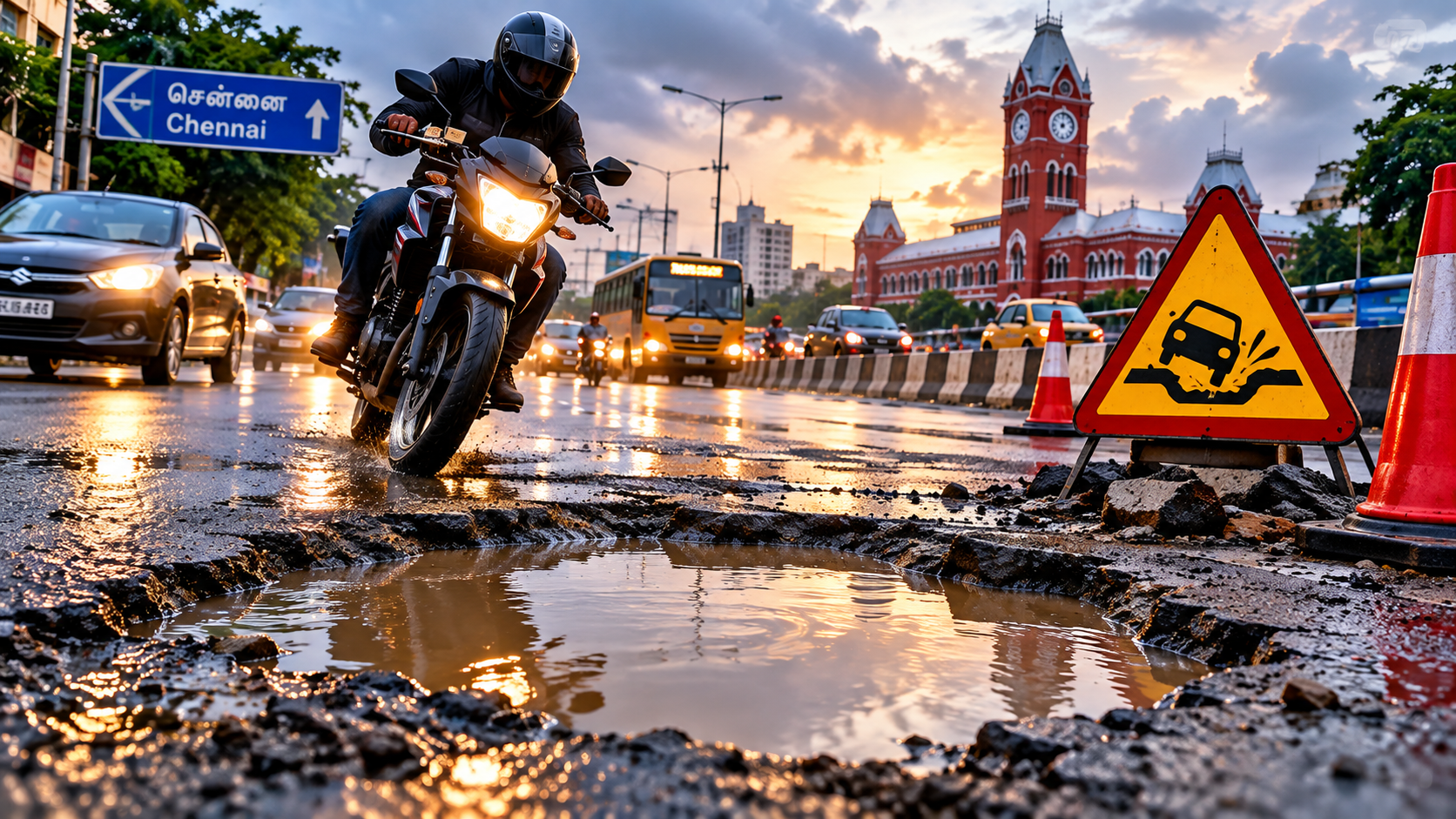
Chennai is one of India’s major metropolitan cities, known for its busy streets, growing infrastructure and millions of daily commuters. But beneath the everyday rush of cars, buses, motorcycles and auto-rickshaws lies a serious road safety problem: dangerous potholes that can turn an ordinary journey into a life-threatening accident.
For two-wheeler riders, even a single deep pothole can cause a sudden loss of balance. When roads are wet, visibility is poor or traffic is moving fast, the danger becomes even greater.
Potholes are not merely an inconvenience. They can damage vehicles, cause serious injuries and contribute to fatal crashes. So why do these road hazards keep returning, and what should be done to protect Chennai’s commuters?
1. Why Are Potholes Such a Serious Problem in Chennai?
Several factors can contribute to the formation and persistence of potholes on city roads.
Heavy Monsoon Rain
Rainwater can enter cracks in road surfaces and weaken the layers underneath. When vehicles repeatedly pass over weakened areas, the surface may break apart and form potholes.
Water-filled potholes are especially dangerous because drivers cannot easily judge their depth.
Poor Road Maintenance
Temporary patchwork may fail if repairs are carried out without addressing the underlying cause of the damage. A pothole that appears repaired can reopen when the material deteriorates or water enters the road structure.
Roads Left Unfinished After Utility Work
Water pipelines, drainage systems, electricity cables and telecommunications infrastructure often require road excavation.
When excavated roads are not restored properly, uneven surfaces, loose gravel and sudden depressions can create serious hazards for commuters.
Heavy Vehicle Traffic
Buses, trucks, water tankers and other heavy vehicles place substantial loads on road surfaces. If the road structure or drainage system is inadequate, repeated loading can accelerate deterioration.
The problem is not simply that roads develop potholes. It is that dangerous defects may remain exposed to traffic without adequate warnings or timely repairs.
2. Fatal Accidents: When a Pothole Becomes a Death Trap
Chennai has witnessed disturbing incidents involving dangerous road conditions.
The original TamilGeo article highlighted the death of 24-year-old Hemamalini in Virugambakkam in July 2024 after she fell into a rain-covered pothole. It also referred to a fatal accident involving a motorcyclist on Anna Salai in November 2021, where a pothole reportedly contributed to the rider losing balance before being crushed under a bus. Read the original TamilGeo article.
These incidents illustrate why road maintenance must be treated as a public safety responsibility rather than a cosmetic infrastructure task.
A pothole may appear small to someone travelling in a car, but it can be extremely dangerous for a motorcyclist. A sudden impact can destabilise the front wheel, throw the rider off the vehicle or force a dangerous manoeuvre into adjacent traffic.
Pedestrians and cyclists can also face risks from damaged surfaces, unexpected vehicle movements and poor drainage.
A road defect that goes unnoticed by one driver may become a life-changing hazard for another.
3. The Numbers Behind the Road Safety Problem
The original article cited historical figures reported for Tamil Nadu between 2017 and 2021: 2,499 pothole-related accidents and 523 deaths, including 109 deaths attributed to potholes in 2021.
These figures should be understood as historical reported data, not current accident totals. Readers should consult the underlying government records and original reporting before using them as verified statistics in new publications.
Official road accident statistics are useful for understanding the scale of the wider safety challenge, but they do not necessarily identify potholes as the cause of every recorded accident.
The key issue remains clear: dangerous road surfaces require prompt attention, reliable maintenance and transparent reporting.
4. What Is the Government Doing About Potholes?
Road maintenance and traffic safety involve multiple agencies, depending on who owns and manages a particular road.
The Greater Chennai Corporation, highways authorities, utility providers and other agencies may have different responsibilities. Effective coordination is therefore essential.
Road Safety Funding
Tamil Nadu has introduced initiatives intended to support road safety improvements, including the Tamil Nadu Non-Lapsable Road Safety Fund.
Funding can support safety-related work, but the impact depends on how effectively projects are selected, completed and monitored.
Namma Salai: Reporting Road Problems
Digital grievance systems can help residents report potholes and other civic problems.
The original article highlighted the Namma Salai app as a reporting option. Before publishing current response-time promises, check the latest official instructions because deadlines and procedures may differ by road category and responsible authority.
When reporting a pothole, provide its location, nearby landmarks and photographs if it is safe to take them.
Improvements at Accident-Prone Locations
Junction redesign, better drainage, improved road surfaces and safer construction practices can reduce risks at dangerous locations.
The original article also referred to proposed infrastructure improvements and efforts to address accident-prone road locations. Such proposals should be distinguished from completed projects when discussing their current status.
Traffic Monitoring and Enforcement
Traffic cameras, police patrols and enforcement can help address dangerous driving. However, they cannot replace the need to maintain safe road surfaces.
Road safety requires both responsible driving and responsible infrastructure management.
5. What More Must Be Done to Prevent Pothole Accidents?
Announcements and temporary repairs are not enough. Chennai needs a systematic approach to identifying road hazards, fixing their causes and preventing the same defects from returning.
1. Hold Contractors Accountable
Road contracts should include clear quality requirements, proper inspections and appropriate accountability for defective work.
Where investigations establish that poor workmanship or failure to meet contractual requirements caused a defect, the responsible parties should face the consequences provided by the contract and applicable law.
Repairs should address the underlying problem instead of merely covering the visible hole.
2. Introduce Regular Road Inspections
Authorities should inspect roads at regular intervals, particularly after heavy rainfall and major utility works.
A centralised record of potholes could include their location, severity, date reported, responsible agency, repair deadline and completion status.
This would make it easier to identify recurring problems and hold the relevant authorities accountable.
3. Use Technology to Detect Road Damage
Cameras, sensors and image-recognition systems can help identify road defects more quickly.
Municipal vehicles could potentially collect road-condition data during routine journeys, allowing authorities to prioritise serious hazards.
Technology should support inspections and repairs rather than replace physical verification where necessary.
4. Set Clear Repair Priorities
Not every road defect carries the same level of risk.
A deep pothole on a busy road, a water-filled hole near a junction or a defect in a high-speed traffic lane may require more urgent action than a minor surface irregularity on a quiet street.
Authorities should prioritise repairs according to severity, traffic exposure and the likelihood of serious injury.
5. Improve Warning Signs and Barricades
When immediate repair is not possible, authorities should provide visible warnings, appropriate barricades and reflective markers.
During rainy weather, these precautions are particularly important because water can conceal the size and depth of a pothole.
Temporary warnings must remain visible and secure until the hazard is properly addressed.
6. Coordinate Utility and Road Works
Roads frequently need to be opened for water supply, drainage, electricity and telecommunications projects.
Agencies should coordinate excavation schedules and establish clear requirements for restoring the road after work is completed.
Repeatedly digging up newly repaired roads wastes public money and creates avoidable risks for commuters.
7. Publish Repair Progress
Residents should be able to see whether a reported pothole has been inspected, assigned to an agency, repaired or left unresolved.
Public dashboards and complaint-tracking systems can help improve transparency and encourage faster action.
6. What Can Citizens Do to Stay Safe?
Although authorities have a responsibility to maintain roads, commuters can take practical precautions to reduce their exposure to danger.
Slow down in the rain. Wet surfaces and water-filled potholes make it difficult to judge road conditions.
Maintain a safe following distance. This gives you more time to notice hazards and react without sudden braking.
Avoid sudden swerving. A quick manoeuvre around a pothole can put you directly into the path of another vehicle. Check surrounding traffic before changing direction.
Use a properly fitted helmet. Two-wheeler riders and passengers should wear helmets that meet applicable safety standards.
Avoid flooded or unfamiliar sections of road when possible. Water may conceal deep potholes, open drains or damaged surfaces.
Report dangerous potholes. Use the appropriate official civic or highways grievance channel and provide a precise location. Never stop in a dangerous traffic lane just to photograph a road defect.
Keep your vehicle in good condition. Proper tyres, brakes, lights and suspension can help you respond more safely to changing road conditions.
These precautions cannot eliminate every hazard, but they can reduce the risk of an accident.
7. Who Is Responsible for Fixing a Pothole?
Responsibility depends on the road’s ownership and the type of defect.
A city street may fall under the municipal corporation, while certain major roads or highways may be maintained by a state highways authority, the National Highways Authority of India or another designated agency.
Where a pothole results from utility excavation, the relevant utility provider and road authority may both have responsibilities under applicable rules and agreements.
Residents should report the problem through the appropriate official channel and retain the complaint reference if one is provided.
Where a dangerous defect remains unresolved, citizens can seek clarification from the responsible agency or use the relevant grievance escalation process.
8. Chennai Deserves Safer Roads, Not Just Better-Looking Roads
Road development should not be measured only by the number of kilometres laid, resurfaced or inaugurated.
A road must remain safe after construction, during monsoon rainfall and after utility work. It must serve motorcyclists, pedestrians, cyclists, public transport users and drivers alike.
That requires good engineering, effective drainage, quality materials, routine inspection and timely repairs.
Most importantly, road safety should be measured by the risks prevented and lives protected, not just by completed projects.
Conclusion: No One Should Lose Their Life Because of a Pothole
Chennai’s pothole problem is more than a matter of inconvenience. Damaged roads can cause vehicle damage, dangerous falls, severe injuries and fatal accidents.
Government agencies must identify hazards promptly, improve repair quality, coordinate road works and make maintenance progress transparent. Contractors and utility providers must meet their responsibilities, while citizens should report dangerous defects and travel carefully.
Every pothole repaired properly is a potential accident prevented. Every warning placed in time may help save a life.
Safe roads are not a luxury. They are an essential public responsibility.
Let us work towards a Chennai where people can travel to work, school, hospitals and home without fearing that a hidden hole in the road could change their lives forever.
If you notice a dangerous pothole, report it through the appropriate official channel and share the information responsibly so that the hazard can be addressed.
Disclaimer: This article is for public awareness and general informational purposes. Accident details and historical statistics should be verified against primary records before republication. Responsibility for a particular road defect depends on the facts, applicable law and the agency responsible for that road.