
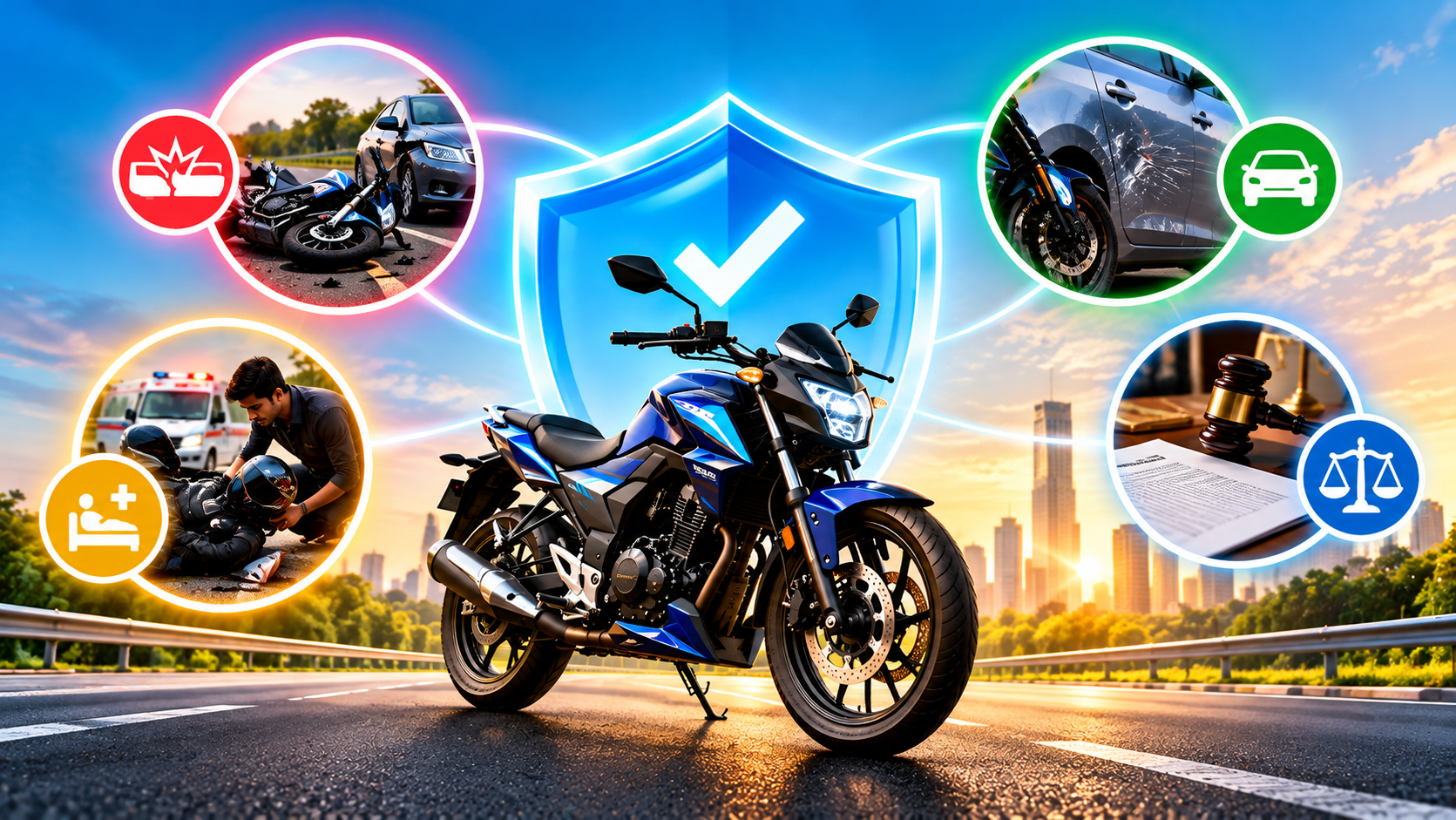
Owning a bike or scooter makes daily travel convenient, but road accidents can lead to unexpected expenses, injuries and property damage. Even a minor accident can create financial and legal problems if you are responsible for harming another person or damaging their property.
This is why third-party bike insurance is mandatory for two-wheelers used on public roads in India.
In this guide, we will explain what third-party bike insurance means, why it is required by law, what it covers, its benefits and limitations, and how you can buy or renew a policy online.
What Is Third-Party Bike Insurance?
Third-party bike insurance is a motor insurance policy that protects you against eligible legal liabilities arising when your bike causes injury, death or property damage to another person.
In a typical insurance arrangement, there are three parties:
- First party: You, the insured bike owner.
- Second party: The insurance company providing the policy.
- Third party: Another person who suffers injury, death or property damage due to an incident involving your bike.
For example, imagine that you accidentally hit another person’s parked car while riding your motorcycle. If you are legally liable for the damage, your third-party insurance may cover the eligible liability according to the policy terms.
However, third-party bike insurance does not normally cover damage to your own bike. You need suitable own-damage cover for protection against damage to your vehicle.
Why Is Third-Party Bike Insurance Mandatory in India?
Under Section 146 of the Motor Vehicles Act, 1988, motor vehicles used in public places must have the required third-party insurance coverage.
The main purpose of this requirement is to help protect people who suffer injury, death or property damage in road accidents.
Without insurance, a bike owner may have to meet eligible compensation and legal liabilities from personal funds.
Riding without valid third-party insurance can also lead to legal penalties under Section 196 of the Act. The applicable provisions include a fine and, in certain circumstances, imprisonment.
You can find official information in the Ministry of Road Transport and Highways press release.
What Does Third-Party Bike Insurance Cover?
The coverage depends on the applicable law and policy terms. Common areas of protection include the following.
1. Third-Party Bodily Injury
If your bike causes an accident that injures another person and you are legally liable, the insurance policy can cover eligible compensation.
2. Third-Party Death Liability
If a road accident involving your bike results in another person’s death and you are legally liable, third-party insurance provides protection for eligible compensation claims under the applicable legal framework.
3. Third-Party Property Damage
If your bike damages another person’s car, motorcycle, wall or other property, the policy may cover eligible liability up to the applicable policy limit.
Check the policy wording for the relevant property-damage limit and exclusions.
4. Legal Liability Protection
Third-party insurance helps protect you against covered legal liabilities arising from an accident. The insurer handles eligible claims according to the policy conditions and applicable law.
What Is Not Covered by Third-Party Bike Insurance?
Third-party insurance is important, but it does not provide complete protection for every situation.
Common limitations include:
- Damage to your own bike: Repairs to your own vehicle are not normally covered.
- Bike theft: The policy does not normally compensate you for the theft of your own motorcycle.
- Your own vehicle’s fire damage: You generally need suitable own-damage coverage for this protection.
- Your own medical expenses: Third-party motor insurance is not a substitute for personal accident or health insurance.
- Mechanical breakdown: Ordinary mechanical failure is not normally covered under third-party liability insurance.
Other exclusions and conditions may apply depending on the policy and circumstances.
If you want broader protection for your bike, consider a comprehensive or package policy, or combine a standalone own-damage policy with valid third-party insurance.
Third-Party vs Comprehensive Bike Insurance
Before purchasing insurance, it is useful to understand the difference between these two options.
| Feature | Third-Party Insurance | Comprehensive / Package Insurance |
|---|---|---|
| Third-party injury or death liability | Covered, subject to applicable terms and law | Covered |
| Third-party property damage | Covered within applicable limits | Covered within applicable limits |
| Damage to your own bike | Not normally covered | Covered for specified insured events |
| Theft of your bike | Not covered | Generally covered, subject to policy terms |
| Fire damage to your bike | Not covered | Generally covered, subject to policy terms |
| Premium | Generally lower | Generally higher |
| Mandatory for public-road use | Required | Meets the requirement when valid third-party cover is included |
A standalone own-damage policy is another option, but it must be held alongside valid third-party insurance.
For more information, visit the IRDAI Motor Insurance guidance page.
What Are the Benefits of Third-Party Bike Insurance?
1. Helps You Meet Legal Requirements
Having valid third-party insurance helps you comply with India’s motor vehicle insurance requirements when using your bike on public roads.
2. Protection Against Eligible Liabilities
If you cause an accident, compensation claims involving another person’s injury, death or property damage can create a substantial financial burden. Third-party insurance helps cover eligible liabilities.
3. Affordable Basic Insurance
Third-party insurance is generally less expensive than comprehensive insurance because it does not normally cover damage to your own vehicle.
4. Less Financial Uncertainty
An accident can happen even when you are travelling a short distance. Insurance provides an important layer of financial protection against covered third-party claims.
5. Convenient Online Purchase and Renewal
Many insurers allow customers to compare policies, purchase insurance and renew existing coverage online without visiting a branch.
How to Buy Third-Party Bike Insurance Online
You can generally purchase a third-party bike insurance policy by following these steps.
Step 1: Visit an insurance company’s official website.
Choose a licensed insurer or a legitimate insurance distribution platform.
Step 2: Enter your bike details.
You may need to provide your registration number, vehicle model, registration details and other requested information.
Step 3: Select third-party insurance.
Choose the liability-only policy if you need basic third-party coverage. If you want protection for your own bike, compare comprehensive or package policies as well.
Step 4: Check the premium and coverage.
Review the policy period, covered liabilities, applicable property-damage limits and policy conditions before paying.
Step 5: Enter your personal details.
Provide accurate information and check that your name, vehicle registration and other details are correct.
Step 6: Complete the payment.
Pay through the insurer’s official payment facility.
Step 7: Download your policy document.
After the purchase is confirmed, save the policy document and verify the vehicle details and insurance validity dates.
How to Renew Third-Party Bike Insurance
Renewing your insurance before it expires helps you avoid a gap in coverage.
- Visit your insurer’s official website.
- Select the bike insurance renewal option.
- Enter your registration number or existing policy details.
- Verify your vehicle information.
- Review the renewal premium and policy duration.
- Complete the payment.
- Download the renewed policy and check its start and end dates.
Do not assume that your insurance remains valid after expiry. If the policy has lapsed, contact the insurer about the correct renewal process before riding the bike.
What Documents Are Required?
The exact requirements vary by insurer and the circumstances of the purchase, but you may need:
- Bike registration certificate (RC) or registration details.
- Existing insurance policy, if renewing.
- Vehicle owner’s name and contact details.
- Other vehicle or identity information requested by the insurer.
Keep your insurance certificate and other required vehicle documents accessible when using your bike.
How Much Does Third-Party Bike Insurance Cost?
The premium depends on the applicable rules and factors such as the vehicle category and engine capacity.
Third-party motor insurance premiums are regulated, so the liability premium for comparable vehicles and policy terms is generally standardised. However, the total amount payable may vary depending on the policy structure and any additional covers or applicable charges.
When comparing insurance, check that you are comparing equivalent coverage and policy periods.
Do not choose a policy based on price alone. Confirm that the insurer, vehicle details and coverage are correct.
Tips Before Buying Bike Insurance
Keep these points in mind when choosing a policy:
- Buy insurance from a legitimate insurer or authorised distribution channel.
- Read the policy document and understand the exclusions.
- Verify the registration number and owner details.
- Check the policy’s validity period.
- Renew before the expiry date.
- Consider comprehensive or own-damage cover if you also want protection for your own bike.
- Keep a digital copy of your insurance certificate.
Frequently Asked Questions
Is third-party bike insurance compulsory in India?
Yes. Section 146 of the Motor Vehicles Act, 1988, requires the prescribed third-party insurance cover for motor vehicles used in public places.
Does third-party insurance cover damage to my own bike?
No, not normally. You need appropriate own-damage coverage for eligible damage to your own vehicle.
Does third-party insurance cover another person’s car if I hit it?
It may cover your eligible legal liability for the damage, subject to the policy terms and applicable limits.
Can I buy only third-party bike insurance?
Yes. You can generally purchase a liability-only policy to meet the third-party insurance requirement, provided the policy is valid and appropriate for your vehicle.
Is third-party insurance cheaper than comprehensive insurance?
It is generally cheaper because it provides more limited coverage and does not normally cover damage to your own bike.
Can I renew my policy online?
Yes. Many insurers offer online renewal through their official websites or applications.
What happens if I ride without valid third-party insurance?
You may face legal penalties under the applicable provisions of the Motor Vehicles Act. You may also have to meet third-party liabilities without the protection of a valid policy.
Conclusion
Third-party bike insurance is an essential part of responsible riding in India. It helps meet legal requirements and protects against eligible financial liabilities when an accident involving your bike injures another person or damages their property.
However, it does not normally cover repairs to your own bike or compensate you for its theft.
Before buying insurance, decide whether basic third-party coverage is sufficient for your needs or whether you would benefit from a comprehensive policy. Always check the coverage, exclusions and validity dates before purchasing or renewing.
Ride safely, keep your insurance valid and protect yourself against unexpected road-related liabilities.
Disclaimer: This article is for general educational purposes and does not constitute legal or financial advice. Insurance coverage and legal consequences depend on applicable law and the specific policy terms.
Official Reference
For further information, visit the IRDAI Motor Insurance guidance page.