
Owning a bike or scooter makes daily travel easier, but accidents, theft, fire and unexpected damage can lead to expensive repairs. Having the right insurance can help protect you from these financial risks.
First-party bike insurance, commonly called own-damage (OD) insurance, helps cover damage or loss to your own two-wheeler, subject to the terms and conditions of your policy.
In this guide, we explain how first-party bike insurance works in India, what it covers, what it excludes, and how to choose suitable protection for your bike.
What Is First-Party Bike Insurance?
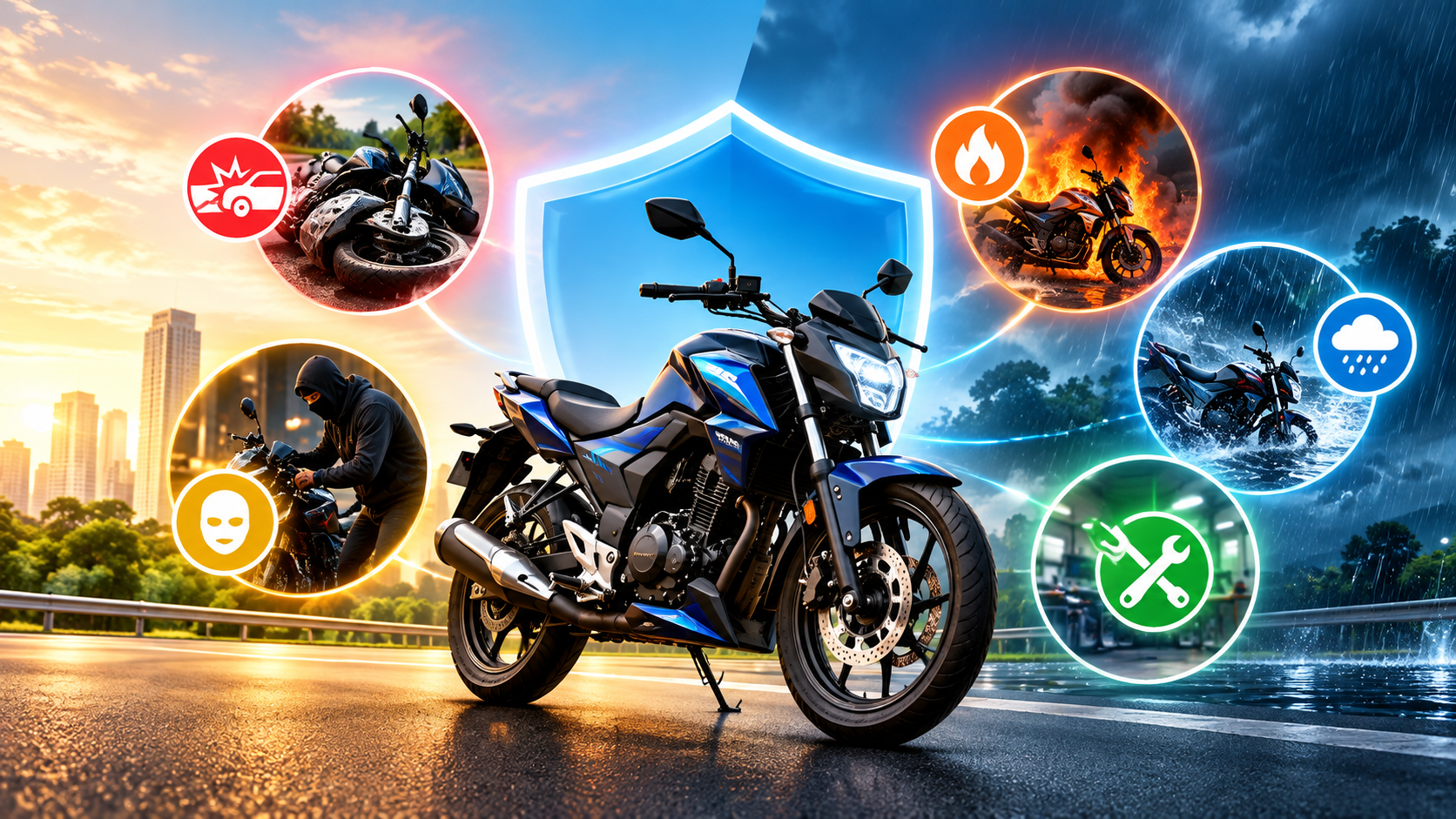
First-party bike insurance protects your own insured vehicle against specified risks. Depending on your policy, these may include accidental damage, theft, fire and certain natural disasters.
For example, imagine that you accidentally skid on a wet road and damage your bike’s front panel, headlight and indicators. If your policy covers the accident, you may be able to claim eligible repair expenses from your insurer after applicable deductions.
First-party insurance is different from third-party insurance, which covers eligible legal liabilities arising from injury, death or property damage caused to another party.
According to the Insurance Regulatory and Development Authority of India (IRDAI), third-party liability insurance is mandatory for vehicles used on public roads, while own-damage protection can be purchased through suitable insurance arrangements.
What Does First-Party Bike Insurance Cover?
The exact coverage depends on your insurer and policy wording, but common covered risks may include the following.
1. Accidental Damage
If your bike is damaged in a road accident, the policy may pay for eligible repairs or replacement parts, subject to the terms of coverage.
2. Theft of Your Bike
If your insured two-wheeler is stolen and the claim meets the policy requirements, you may receive compensation based on the applicable insured declared value (IDV) and settlement conditions.
3. Fire Damage
Damage caused by a covered fire incident may qualify for compensation under your own-damage policy.
4. Natural Disasters
Certain natural events, such as floods, cyclones, storms and earthquakes, may be covered according to the policy terms.
5. Damage Caused by Other Specified Events
Some policies cover damage caused by events such as riots or malicious acts. Check the policy wording to confirm which risks are included.
6. Cashless Repair Facilities
Many insurers have network garages where eligible repairs can be settled directly between the insurer and the workshop. You may still need to pay deductibles, excluded expenses and other amounts not covered by your policy.
What Is Not Covered by First-Party Bike Insurance?
First-party insurance does not automatically cover every kind of damage. Common exclusions or situations that may affect a claim include:
- Riding without a valid driving licence.
- Driving under the influence of alcohol or prohibited substances.
- Normal wear and tear.
- Mechanical or electrical breakdown not caused by an insured event.
- Damage arising from racing or other excluded activities.
- Losses that fall outside the policy’s specified coverage.
- Failure to follow applicable policy conditions.
The exact exclusions vary by insurer and policy. Always read your policy document before purchasing coverage.
First-Party vs Third-Party Bike Insurance
Understanding the difference between these two types of insurance can help you make a better decision.
| Feature | First-Party / Own-Damage Cover | Third-Party Cover |
|---|---|---|
| Damage to your own bike | Covered for specified insured events | Not covered |
| Damage to another person’s property | Not the main purpose of this cover | Covered subject to policy terms and limits |
| Injury or death of another person | Not the main purpose of this cover | Covers eligible legal liability |
| Theft of your bike | May be covered | Not covered |
| Mandatory for road use in India | Not by itself | Yes |
| Main benefit | Helps protect your bike’s value | Protects against eligible third-party liabilities |
A comprehensive or package policy generally combines own-damage and third-party liability protection. Alternatively, eligible vehicle owners can purchase a standalone own-damage policy alongside a separate valid third-party policy.
Why Is First-Party Bike Insurance Worth Considering?
Financial Protection
Bike repairs can become expensive after a serious accident. Own-damage insurance can reduce the financial burden of covered repairs.
Protection Against Theft
Replacing a stolen bike can be costly. A policy that covers theft may provide financial compensation if the claim meets the insurer’s requirements.
Help During Unexpected Events
Floods, storms and fires can damage two-wheelers. Suitable insurance can help protect against specified losses caused by these events.
Greater Peace of Mind
If you use your bike every day for commuting, shopping or travelling, own-damage protection can help you manage unexpected vehicle-related expenses.
How to Choose the Right First-Party Bike Insurance
Before buying or renewing your policy, compare these important factors.
1. Insured Declared Value (IDV)
IDV is the insured value assigned to your vehicle for relevant claims, particularly theft and total loss. Compare the IDV offered by different insurers rather than choosing a policy based only on its premium.
2. Premium Cost
Compare quotes from multiple insurers. A lower premium may come with a different IDV, higher deductibles or fewer benefits.
3. Network Garages
Check whether the insurer has convenient network garages near your home or workplace if you prefer cashless repairs.
4. Deductibles
A deductible is the portion of a claim you must pay under the policy terms. Understand the applicable compulsory and voluntary deductibles before purchasing coverage.
5. Add-On Covers
Depending on availability and eligibility, you may be able to purchase additional protection, such as zero depreciation or roadside assistance. Check the additional cost and the conditions attached to each add-on.
6. Claim Process and Service
Review the insurer’s claim procedure, documentation requirements and support options so you know what to do if your bike is damaged or stolen.
How to Claim First-Party Bike Insurance After an Accident
Follow these steps when you need to make an own-damage claim.
Step 1: Inform your insurer.
Report the accident or damage as soon as possible and follow the notification deadline in your policy.
Step 2: Photograph the damage.
Take clear photographs of the damaged areas and the accident scene, if it is safe to do so.
Step 3: File a police report if required.
For theft, serious accidents or other incidents requiring police involvement, obtain the relevant report and supporting documents.
Step 4: Submit your claim.
Complete the insurer’s claim form and provide the requested documents, which may include your insurance policy, registration certificate (RC), driving licence and photographs.
Step 5: Arrange the vehicle inspection.
The insurer may appoint a surveyor or request an inspection before approving repairs. Follow the insurer’s instructions before authorising repair work.
Step 6: Complete the repairs.
Use an approved network garage if you want to access the insurer’s cashless repair facility and the repair is eligible.
Step 7: Review the settlement.
The insurer will assess the claim according to the policy terms. Deductibles, depreciation and excluded items may affect the final amount.
For theft claims, follow the insurer’s instructions regarding the police complaint and other required documents.
Is First-Party Bike Insurance Mandatory in India?
Third-party liability insurance is mandatory for vehicles used on public roads in India. First-party own-damage insurance is not independently mandatory, but it can provide valuable protection against damage to your own vehicle.
If you choose a standalone own-damage policy, make sure you also have the required valid third-party insurance.
Frequently Asked Questions
Can I buy first-party bike insurance without third-party insurance?
A standalone own-damage policy is generally intended to be held alongside valid third-party insurance. Check the insurer’s eligibility and documentation requirements before purchasing.
Does first-party insurance cover bike theft?
Theft is commonly covered under own-damage policies, subject to the policy conditions and claim requirements.
Can I claim for minor scratches?
You may be able to claim for covered accidental damage. However, compare the likely payout against the deductible and any impact on your no-claim bonus before deciding whether to claim.
Does first-party insurance cover engine damage?
It depends on the cause of the damage and the policy wording. Engine damage resulting from an insured event may be treated differently from mechanical breakdown or consequential damage. Some policies offer additional engine protection as an add-on.
What is the difference between comprehensive insurance and own-damage insurance?
A comprehensive or package policy generally combines own-damage protection with third-party liability cover. A standalone own-damage policy primarily protects your own vehicle and must be paired with valid third-party insurance.
Final Thoughts
First-party bike insurance can be a useful way to protect your two-wheeler against unexpected repair costs, theft and other specified risks. The right policy depends on your bike’s value, how frequently you ride, your budget and the protection you need.
Before purchasing a policy, compare premiums, IDV, deductibles, exclusions and claim services. Most importantly, maintain valid third-party insurance and read the policy conditions carefully.
A little preparation today can help you manage unexpected expenses tomorrow.
Disclaimer: This article is for general educational purposes and is not financial or insurance advice. Coverage, exclusions and claim settlements depend on the terms of the policy you purchase.
Reference
For official guidance on motor insurance in India, visit the IRDAI Motor Insurance information page.